

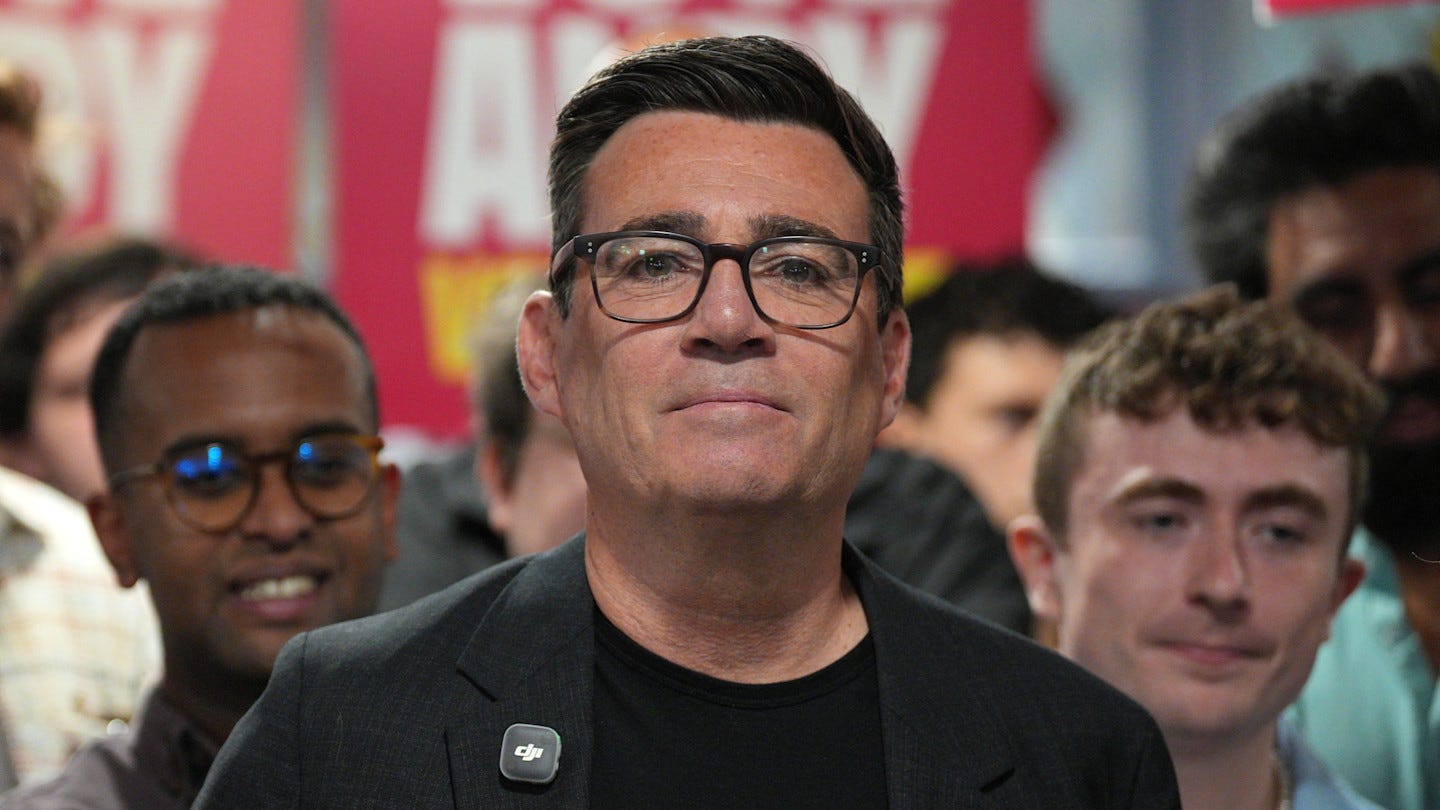
The line of ex-prime ministers is now becoming embarrassingly long. Since 2016, Britain has added four to the invite list and is about to add a fifth. The country is slowly resembling the late Soviet Union. Detached leaders arrive and disappear with monotonous regularity, and the people have little say in it. A comparison made perhaps more apt by the rapidly deteriorating social fabric and anaemic economic growth.
Defenestrating a political leader is nothing new to British politics. It’s become about as normal as spontaneous by-elections, ministers resigning in disgrace and billions more being allocated to pensions, but the frequency in which it is happening now verges on the level of absurd. For a country that prides itself on institutional stability, the last decade of revolving prime ministers has exposed many of the glaring flaws inherent in Britain’s democratic consensus. Every decision is framed through a short-term basis – how can we improve conditions now, rather than in, say, five years. That’s partly why the orthodoxy of spending and borrowing more reigns supreme – no one is willing to make the sacrifices necessary in the present to create prosperity in the future.
Some argue our attritional democratic environment makes even good leaders look mediocre. I do not find this convincing. The idea that, in more stable times, Keir Starmer would be acclaimed as a decent or renowned prime minister seems far-fetched. Starmer’s inadequacy transcends the moment.
Barely two years into his premiership, he has proven hopelessly inept at navigating the challenges of the day. A man so offensively boring, he has inexplicably created a volatile political landscape that offers a new scandal or drama every week. His lack of interest in cultivating a base of support has left him isolated and vulnerable, exposing him to attacks on both sides of the political spectrum. The few accomplishments he can point to his name have been largely ignored because of an inability to communicate a message that will resonate with any voters.
Operational competence is a prerequisite of achievement in office, regardless of whether we deem the achievement positive or negative. The reason that PMs like Blair or Thatcher are consequential at all is that they were at least reasonably good at all the fundamentals of the job, with the best evidence for this being that they got re-elected or weren’t turfed out unceremoniously (or, at least in Thatcher’s case, not until they passed the 10 year mark).
Prime ministers fail when they are captives of whatever situation they find themselves in. Bad prime ministers don’t make things happen; things happen to them. They stand outside No.10, say some fine words, then go inside and kneel down before the real boss: events.
Failed prime ministers also tend to lack one or all of the following three things: the personal ability to bring voters and MPs onside; the intellectual ability to deal with the demands of a very complex job; and the temperament to make tough decisions under pressure. Some, like Starmer, fail on all four dimensions. Others have had one attribute in abundance (Johnson had personal charisma, Sunak was clever) but fall short on the others.
Without a guiding set of principles to anchor his programme, Starmer has swung from one reset to another. Nowhere is that more pronounced than on the topic of immigration. He has both championed multicultural Britain and condemned the “incalculable damage” immigration has done to Britain. He has warned that the country is becoming an “island of strangers” before later retracting the statement and issuing an apology. He has attacked the conservatives as cruel and then accused them of running an “open borders experiment”. He can hardly be surprised that the same anti-government animosity that propelled him into power now engulfs him.
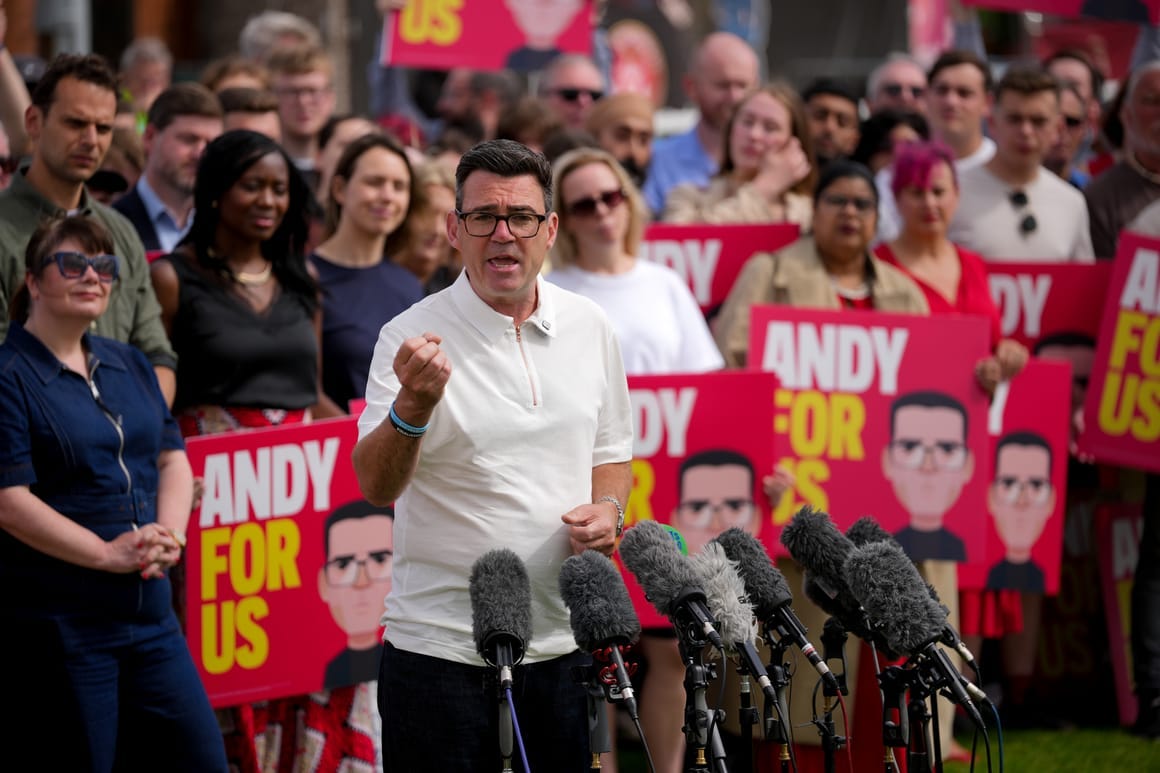
Enter instead: the Prince Across the Water. “All hail Andy Burnham, King of the north, defender of devolution and protector of Manchesterism.” So rang out the chorus amongst our commentariat this past week, as the Mancunian mayor prepares to usurp Starmer. And it does sound more of a chorus. With the way in which some have described Burnham, you’d be forgiven for mistaking him with the second coming of Christ - a messianic figure resurrecting from what had looked like political purgatory to lead the nation towards greatness.
There is admittedly an alluring romanticism in the idea of a virtuous hero waiting on the sidelines to step in and rescue a nation at its darkest moment. Think Napoleon in the War of the Second Coalition or Churchill when the British Expeditionary Force were at risk of annihilation on the beaches of Dunkirk. Psychologically, at our most vulnerable, we all seek a paternalistic figure who can right the ship and navigate out of the perilous waters.
Since his self-imposed exile to Manchester, Burnham has experienced a dramatic political transformation, molding his own political brand in his northern fortress. Starting as a forgettable functionary under Blair/Brown who finished fourth in the 2010 leadership contest (just a point above Dianne Abott, of all people), he has cultivated an image of himself as a salt-of-the-earth, working-class, man of the people, helped in part by his Lancastrian accent and penchant for casual clothing. He wears jeans, sports an Everton top on his morning runs and wants you to know he likes Oasis. Everything about him screams: Northern Man – the lamest superhero since Condiment King. And he leans into that stereotype at every opportunity. Though, to his credit, it doesn’t seem entirely fabricated.
Banal as it may sound, Burnham comes across as genuinely nice, and that counts for quite a lot in our increasingly personality-driven world. He seems genuinely ‘normal’, which is unusual for a senior politician, and an art in itself. He’s very good at talking about football or music, and all the non-political stuff. You only have to watch his Makerfield launch video to see how voters in Manchester feel about him, and how he responds to them. He’s warm and funny and, in certain contexts at least, at ease in his own skin. He has the rare ability to speak from the heart in public, plainly and directly. That charm might perhaps give Burnham a much-needed start. Voters will respond positively to a prime minister without a nasal voice who can raise a smile.
Charisma will only take him so far, however. Burnham doesn’t have a burning mission or purpose except in the vaguest sense. He has a genuine and noble wish to do right by voters who feel alienated and let down by successive governments. But he doesn’t have a serious analysis of what’s gone wrong with the country, which is why he regurgitates the meaningless platitudes we hear all so often - “towns left behind,” “burning injustices of modern society”, “making things work”, etc. On national issues he could make gestures in the politically expedient direction without having to square them with his record or his plans.
The result is that he can sound startlingly vacuous. We all know the remark about not wanting to be ‘in hock’ to the bond markets, without seeming to understand what bond markets are or why we are in hock to them, but it was hardly an anomaly. He mouths the phrase ‘fiscal rules’ without ever giving the impression that he knows what they are or why they matter. In all of the interviews Burnham has given, the Manchester mayor has failed to articulate a cohesive vision for the country or even a roadmap for his premiership.
So far, his own policy agenda is embarrassingly thin: public control of utilities that are already tightly regulated (presumably more public ownership is attractive because the British state runs everything with German efficiency?); more social housing in a country that already has an exceptionally high stock of it; various tax cuts and spending promises that he makes or rescinds on a daily basis; no plan to deal with our parlous fiscal situation. And I harbor scepticism that Burnham has the intellectual capacity to ‘learn on the job.’
Beneath this deficit of ability is a more profound one: one of temperament, or character. Burnham is a people pleaser. To some extent that’s a good thing – politicians have to please people. But it can be a very bad thing in a leader. A crucial attribute of an effective Prime Minister is a willingness to upset people – to size up who they will have to disappoint or anger to get something done, and either assuage them or make them irrelevant. Avoid these trade-offs and you only end up angering everyone, as Keir Starmer has discovered.
A Burnham premiership will be viewing the country through two lenses: rewiring the economy and bring communities together. As mayor, he has evangelised the benefits of devolving powers to local authorities and working in tandem with private companies and I imagine that he’ll try extrapolating this to the national level. The focus will be domestic heavy, shying away from the country-hopping international building entanglements Starmer was so set on.
Burnham’s Manchesterism project only thrived, however, thanks to generous sums of central government funding. It remains to be seen whether he can adapt to the new environment of financial restraint where the slightest uptick in spending or the vague whisper of ‘borrowing’ can upset the markets and cause an exodus of foreign capital.
While I don’t claim to be a sage, I’ve witnesses enough political melodrama to get a sense of where things are heading. Here’s what will probably happen: Starmer will resign and Labour MPs will coronate Burnham to avoid an acrimonious party civil war. He will make a few slight adjustments, shuffle a few cabinet ministers around, sneak a few Oasis allegories into his speeches to remind you he’s from the North and then stare hopelessly at the quagmire he has inherited, realising in real time that simply overseeing an upgrade to Manchester’s bus system does not automatically qualify you to chair the national security council or to act as First Lord of the Treasury. And so, the line of ex-prime ministers at the Cenotaph ceremony will continue to lengthen.